Olympic Legends: Top 5 Medal Winners of All Time (Updated 2025)
0
(0)
The Olympic Games have long been the pinnacle of athletic achievement, showcasing the world’s most exceptional athletes as they compete for glory on the international stage. With decades of history behind them, the Olympics continue to evolve, embracing modern technologies and global connectivity, especially as we move deeper into 2025. In this comprehensive article, we explore the top five Olympic medalists based on their total medal counts as of 2024, while also taking a closer look at their lasting impact on sports and society. We also shed light on how today’s advancements, from digital training platforms to virtual fan experiences, are redefining what it means to be an Olympic champion.
Michael Phelps, the unparalleled champion of the pool, continues to inspire generations.
Michael Phelps stands at the summit of Olympic achievement as the most decorated Olympian of all time. His career, spanning five Olympic Games from 2000 to 2016, redefined excellence in competitive swimming. Phelps not only accumulated 28 medals, including 23 golds, but he also revolutionized training methods and sports science. In 2025, his legacy resonates even more as new digital platforms and interactive training apps continue to promote his techniques and work ethic among aspiring swimmers worldwide.
Phelps’ journey began at the 2000 Sydney Games, where, at the age of 15, he laid the groundwork for a future laden with record-breaking feats. Although he did not medal in Sydney, his experiences there fueled his determination to improve. His breakthrough occurred in Athens 2004, when he clinched six gold and two bronze medals. These early successes provided a glimpse into the extraordinary potential that would later captivate the world.
The 2008 Beijing Olympics remain etched in history as a watershed moment in Phelps’ career. At these Games, he delivered what many consider the greatest single Olympic performance ever by winning eight gold medals in one event—an achievement that shattered Mark Spitz’s longstanding record. His versatility, spanning the 100m butterfly to the 400m individual medley, showcased his exceptional talent and work ethic.
After contemplating retirement following the 2012 London Olympics, where he added four more golds and two silvers, Phelps made a triumphant return in Rio 2016. In his final Olympic appearance, he secured five gold medals and one silver, thereby cementing his status as an enduring icon of the sport. Today, in 2025, his contributions extend beyond the pool; the Michael Phelps Foundation remains a beacon for mental health advocacy and water safety education, influencing a new era of athlete activism.
With the advent of immersive digital technologies, young athletes can now access virtual coaching sessions that simulate Phelps’ training regimes, offering a front-row seat to his legendary workouts. In addition, fan engagement has evolved, with interactive documentaries and augmented reality (AR) experiences allowing fans to relive his historic races. This blend of tradition and innovation ensures that Michael Phelps’ legacy continues to inspire athletes and fans alike.
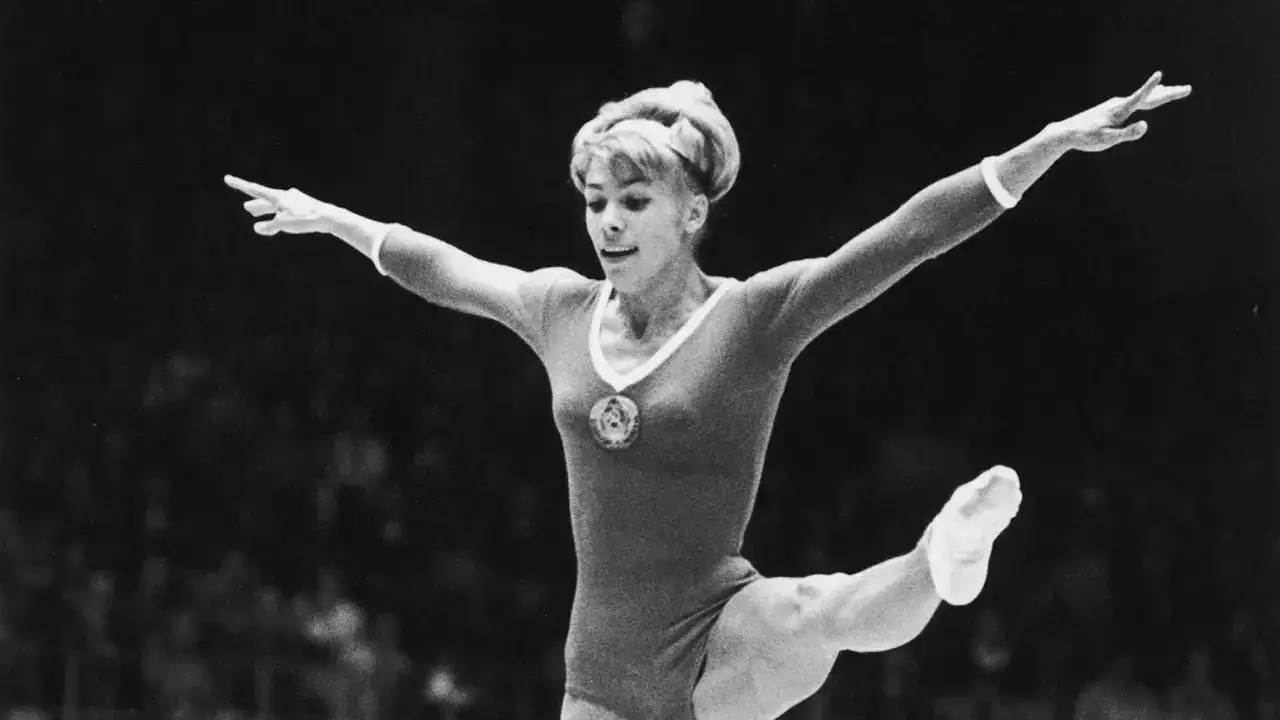
Larisa Latynina’s artistic precision and enduring spirit paved the way for future generations in gymnastics.
Larisa Latynina is celebrated as one of the most dominant gymnasts in Olympic history. Competing for the Soviet Union in three Olympic Games from 1956 to 1964, she amassed a total of 18 medals. Her exceptional performances in the 1956 Melbourne, 1960 Rome, and 1964 Tokyo Olympics set new benchmarks in the sport, establishing her as a trailblazer for female athletes worldwide.
At the 1956 Melbourne Games, Latynina stunned the world by winning four gold medals, including the prestigious all-around title. Her routines, characterized by grace and innovative difficulty, redefined gymnastics and pushed the boundaries of what was thought possible at the time.
In Rome 1960, she further solidified her reputation by defending her all-around title and collecting additional medals—two golds, two silvers, and one bronze. Her impeccable technique and poise under pressure helped her overcome fierce competition, inspiring future gymnasts to push their limits.
Latynina’s final Olympic appearance in Tokyo in 1964, at an age when most gymnasts would be considering retirement, was nothing short of phenomenal. Even at 29, she continued to excel by winning two golds, two silvers, and two bronzes. Her enduring success not only set a record that would stand for nearly five decades but also paved the way for future generations to believe in the limitless potential of female athletes.
Today, in 2025, Larisa Latynina’s legacy is celebrated not just in record books, but also through digital archives and interactive exhibitions. Modern gymnastics training now incorporates video analyses of her routines, and virtual reality (VR) modules allow young gymnasts to learn directly from her innovative techniques. Her story is a reminder that passion and dedication can overcome the limits of time.
Moreover, her influence has transcended sports; many of her former athletes have gone on to become celebrated coaches and sports administrators. In 2025, international sports federations honor her contributions with annual awards that celebrate excellence, resilience, and the enduring power of sport.
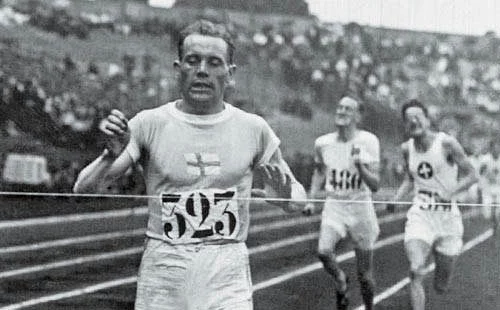
Paavo Nurmi, the “Flying Finn,” revolutionized distance running with his methodical approach.
Paavo Nurmi, famously known as the “Flying Finn,” dominated the world of distance running in the 1920s. Over the span of three Olympic Games, he earned 12 medals—nine of which were gold. His innovative pacing strategy, which involved running with a stopwatch to maintain an even pace, transformed the way distance races were conducted.
Nurmi made his Olympic debut at the 1920 Antwerp Games, where he immediately announced his arrival by clinching three gold medals in the 10,000m, individual cross country, and team cross country events. His scientific approach to training and competition not only redefined distance running but also established a legacy that has inspired generations of athletes.
The 1924 Paris Olympics witnessed Nurmi at his absolute peak. Over the course of just four days, he won an astonishing five gold medals. His record-breaking performances in events such as the 1500m and 5000m races remain an integral part of Olympic lore. Nurmi’s strategy and endurance set new standards, paving the way for modern training methodologies that now incorporate real-time biometric monitoring and AI-driven performance analytics.
Although his final Olympic appearance came in 1928 at the Amsterdam Games, where he added one gold and two silvers to his record, Paavo Nurmi’s influence is timeless. Today, in 2025, technology has further enhanced the way athletes prepare for competitions, with many training apps drawing inspiration from Nurmi’s emphasis on precision and consistency. Virtual competitions and global challenges now celebrate his legacy by inviting runners from all corners of the world to test their limits.
Nurmi’s story is not merely about medals—it is about pioneering the spirit of innovation in sports. His statue outside the Olympic Stadium in Helsinki remains a pilgrimage site for athletes, and digital exhibits in 2025 allow fans to explore his life through interactive timelines and immersive storytelling, bridging the gap between the past and the present.
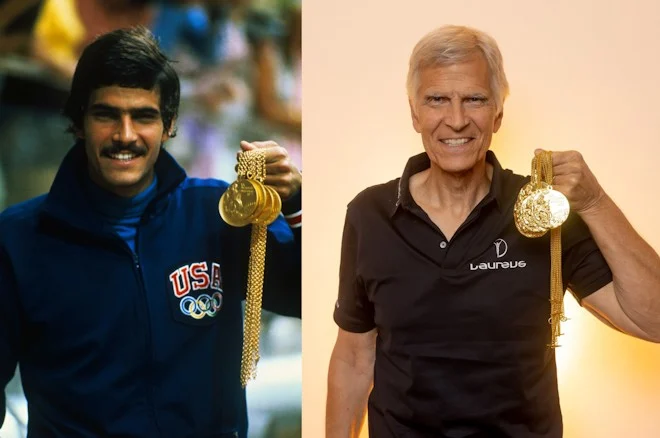
Mark Spitz’s record-breaking performance at the 1972 Munich Olympics remains one of the most iconic moments in swimming history.
Mark Spitz carved out a legendary status in the annals of Olympic history with his breathtaking performances across two Olympic Games. Although his overall medal count stands at 11, it is his record-setting achievement of winning 7 gold medals at the 1972 Munich Olympics that continues to captivate sports enthusiasts. His exploits in Munich, where each gold medal came with a world record, set a standard that would inspire generations of swimmers.
Spitz made his Olympic debut at the 1968 Mexico City Games at just 18 years old. He captured attention by winning two golds in team relay events, a silver in the 100m butterfly, and a bronze in the 100m freestyle. Though his debut hinted at future greatness, it was his promise to return stronger that captured the world’s imagination.
True to his word, Spitz’s performance at the 1972 Munich Olympics was nothing short of extraordinary. Over the span of the Games, he delivered one of the most dominant displays in Olympic history, earning 7 gold medals in events ranging from individual sprints to relays. His technique in the butterfly stroke and his streamlined efficiency redefined competitive swimming.
Spitz’s achievements not only broke records but also raised the profile of swimming as a sport globally. In 2025, his legacy is celebrated in digital museums and through interactive sports analytics platforms that analyze his stroke mechanics in detail. His inspiring journey continues to motivate young swimmers who now benefit from technology that simulates his training routines.
Beyond his Olympic triumphs, Mark Spitz’s contributions to swimming culture include mentoring programs and charity events. Today’s athletes often cite his work ethic and innovative techniques as a benchmark. His enduring impact is a testament to the timeless nature of athletic excellence, bridging the gap between the classic era of the Olympics and today’s high-tech sporting world.
5. Carl Lewis (USA) – 10 Medals (9 Gold, 1 Silver)
Carl Lewis’s extraordinary career in track and field continues to serve as an inspiration for athletes across the globe.
Carl Lewis is often hailed as one of the greatest track and field athletes in history. Over four Olympic Games from 1984 to 1996, he collected a total of 10 medals, including an impressive 9 golds. His dominance in events such as the 100m dash, long jump, and relay races solidified his reputation as a versatile and resilient competitor.
Lewis burst onto the Olympic scene at the 1984 Los Angeles Games, matching Jesse Owens’ legacy by winning four gold medals in a single edition. His performances in the 100m, 200m, long jump, and 4x100m relay captivated fans worldwide and set him on a path to legendary status.
At the 1988 Seoul Olympics, Lewis defended his 100m title under dramatic circumstances following the disqualification of a rival for doping violations. His ability to perform consistently under pressure, along with his remarkable resilience, made his victories even sweeter. His subsequent performances at the 1992 Barcelona and 1996 Atlanta Games further underscored his unparalleled prowess in track and field.
Carl Lewis’s influence extends far beyond his medal count. His training methodologies and dedication to maintaining peak performance into his mid-thirties have become case studies in sports science. In 2025, his legacy is celebrated not only through retrospective documentaries but also via modern training apps that analyze his biomechanics and racing strategies. Lewis’s advocacy for clean sport and his efforts to inspire the next generation of athletes remain central to his enduring influence.
Today, as we witness technological advancements in athletic performance and real-time data analysis, Carl Lewis’s story serves as a reminder of the human spirit’s resilience. Virtual competitions, global fan interactions, and digital training academies pay homage to his achievements, ensuring that his contributions to track and field will continue to inspire athletes for many years to come.
Notable Others: Celebrating Olympic Excellence Beyond the Top Five
While the top five Olympic medalists have etched their names in history, many other athletes have left an indelible mark on the Olympic movement with their extraordinary accomplishments. Their stories, too, deserve recognition in the tapestry of Olympic greatness.
Birgit Fischer (Germany) – Known for her unmatched career in canoe sprint, Fischer won 12 medals, including 8 golds, over a remarkable 24-year span (1980-2004). Competing in six Olympic Games, her ability to adapt to changes in technology, training methods, and equipment has made her a lasting icon in the sport. In 2025, her legacy lives on through digital storytelling projects that document her journey and inspire young paddlers around the world.
Jenny Thompson (USA) – Thompson’s Olympic career in swimming spanned four Games (1992-2004), during which she won 12 medals, including 8 golds. Although many of her medals came from relay events, her individual prowess and the world records she set have left an indelible legacy. In today’s digital era, her story is often shared in interactive multimedia presentations that celebrate her technique and sportsmanship.
Sawao Kato (Japan) – Dominating gymnastics over three Olympics (1968-1976), Kato earned 12 medals, including back-to-back all-around golds in 1968 and 1972. His technical mastery and innovative routines have influenced generations of gymnasts. Modern VR training modules now feature segments that dissect Kato’s techniques, allowing athletes to learn from his precision and artistry.
Nikolai Andrianov (USSR) – As one of gymnastics’ most decorated athletes, Andrianov won 15 medals over three Olympic Games (1972-1980), including four golds at the 1976 Montreal Games. His exceptional performances under pressure continue to inspire coaches and athletes, with digital archives in 2025 providing in-depth analyses of his routines and contributions to the sport.
Edoardo Mangiarotti (Italy) – With 13 medals in fencing (6 gold, 5 silver, 2 bronze) over six Olympic Games (1936-1960), Mangiarotti remains the most decorated fencer in Olympic history. His versatility across both épée and foil events set new standards. In 2025, his legacy is celebrated in virtual exhibits that highlight the evolution of fencing techniques and the strategic brilliance that defined his era.
Alexander Popov (Russia/Soviet Union) – Known as the “Russian Rocket,” Popov was a sprint freestyle sensation across four Olympics (1992-2004). Winning consecutive golds in the 50m and 100m freestyle events, his remarkable speed and precision redefined sprint swimming. Today, interactive timelines and performance analytics in 2025 continue to celebrate his groundbreaking achievements.
Bridging the Past and the Future: The Evolution of the Olympic Spirit
As we reflect on the legacies of these Olympic titans, it is essential to recognize the broader evolution of the Olympic movement. In 2025, the integration of cutting-edge technology, advanced sports science, and global digital connectivity has transformed how athletes train, compete, and engage with fans. Virtual reality, AI-driven performance metrics, and real-time global streaming have not only made the Games more accessible but have also created new ways to experience and celebrate athletic excellence.
The Olympic Games of the future are a testament to human ingenuity. Athletes now benefit from innovations that were once unimaginable, including smart wearables that monitor vital signs, immersive training environments, and sophisticated data analytics. These tools not only enhance performance but also ensure that the spirit of fair play and camaraderie remains at the heart of the competition.
Moreover, fans in 2025 are no longer confined to traditional stadium experiences. Digital platforms have revolutionized fan engagement, enabling virtual ticketing, interactive viewing experiences, and global social media communities that celebrate every moment of Olympic history. This digital transformation has democratized access to the Games, fostering a new generation of Olympic enthusiasts.
The stories of Michael Phelps, Larisa Latynina, Paavo Nurmi, Mark Spitz, and Carl Lewis are not relics of the past; they are living inspirations that drive today’s athletes to push the boundaries of what is possible. Their records continue to motivate competitors who now train in a world enriched with technology, innovation, and unprecedented global connectivity.
Conclusion: A Continuing Legacy of Excellence
The journey of these legendary Olympians is a powerful reminder that sports are not just about medals and records—they are about the relentless pursuit of excellence, the courage to break barriers, and the unyielding human spirit. As we navigate the ever-changing landscape of modern sports in 2025, the legacies of these athletes serve as a beacon for future generations.
From the revolutionary training methods of Michael Phelps to the timeless elegance of Larisa Latynina, from Paavo Nurmi’s methodical determination to Mark Spitz’s record-shattering performances, and from Carl Lewis’s athletic versatility to the inspiring stories of other remarkable Olympians, the Olympic spirit continues to evolve. Today’s athletes stand on the shoulders of giants, equipped with modern tools yet driven by the same passion and dedication that defined the history of the Games.
As digital innovations further intertwine with traditional training regimens, the Olympic legacy remains ever vibrant—a mosaic of human achievement that transcends time and borders. The continuing evolution of the Olympic Games is a tribute to the athletes who have inspired us and a promise to the future, where each generation will add its own chapters to the storied history of this global celebration of sports.
In 2025, as we celebrate both the past and the future, we are reminded that the Olympic flame burns as a symbol of unity, perseverance, and hope. It unites nations and cultures, inspiring us all to strive for greatness in every arena of life. The enduring legacy of these Olympic legends will forever serve as a testament to the power of human determination and the transformative nature of sport.
Looking Ahead: The Future of the Olympic Movement in 2025 and Beyond
As we look to the horizon, the future of the Olympic Games promises to be as dynamic and inclusive as ever. With the continuous evolution of technology and global connectivity, the way we experience and participate in the Olympics is set to undergo further transformation. From sustainable stadium designs to cutting-edge training facilities powered by renewable energy, the spirit of the Games is intertwined with innovation and progress.
Organizers are now leveraging smart technology to create more immersive viewing experiences that allow fans to virtually step into the arena, interact with live data, and even participate in augmented reality challenges during competitions. These developments not only make the Olympics more accessible but also foster a greater sense of global community—a community that transcends traditional boundaries and celebrates human achievement in all its forms.
Looking ahead, the legacy of the Olympic legends discussed in this article will continue to inspire not only athletes but also innovators, educators, and fans around the world. Their stories remind us that the pursuit of excellence is timeless, and in every era, there are individuals who redefine what is possible. In 2025 and beyond, the Olympic spirit will undoubtedly continue to evolve, driven by a shared commitment to unity, fair play, and the relentless quest for greatness.
In conclusion, the achievements of Michael Phelps, Larisa Latynina, Paavo Nurmi, Mark Spitz, Carl Lewis, and many other notable Olympians form a rich tapestry of sports history that inspires current and future generations. Their legacies, enriched by modern technology and a globally connected community, ensure that the Olympic flame continues to light the way for all who dare to dream big.
Whether you are an athlete, a coach, or simply a sports enthusiast, the stories of these legends are a call to action—an invitation to push boundaries, embrace innovation, and pursue excellence in every facet of life. As we celebrate the accomplishments of the past and welcome the innovations of the future, the Olympic Games remain a powerful testament to the enduring human spirit and the unifying power of sport.