Create Lifelike Voices with These 5 Advanced AI Text-to-Speech Tools
0
(0)
The world of artificial intelligence continues to transform the way we interact with technology, and one of the most exciting developments is in the realm of text-to-speech (TTS) software. As we look ahead to 2024 and 2025, the capabilities of AI-driven voice synthesis have reached unprecedented levels of realism and versatility. For content creators, businesses, and individuals seeking to convert written text into natural-sounding speech, the options are more impressive than ever.
But with so many choices available, which AI text-to-speech platforms stand out from the crowd? What features should you look for when selecting a TTS solution? And how can these tools enhance your projects, whether you’re creating audiobooks, developing e-learning materials, or producing voice-overs for videos?
In this exploration of the top AI text-to-speech software platforms, we’ll examine five leading contenders that are set to dominate the market in 2024 and 2025. Each of these platforms offers unique strengths and capabilities, catering to a wide range of use cases and user preferences. From customizable voices to multi-language support, we’ll break down what makes these TTS solutions stand out and how they can elevate your audio content to new heights.
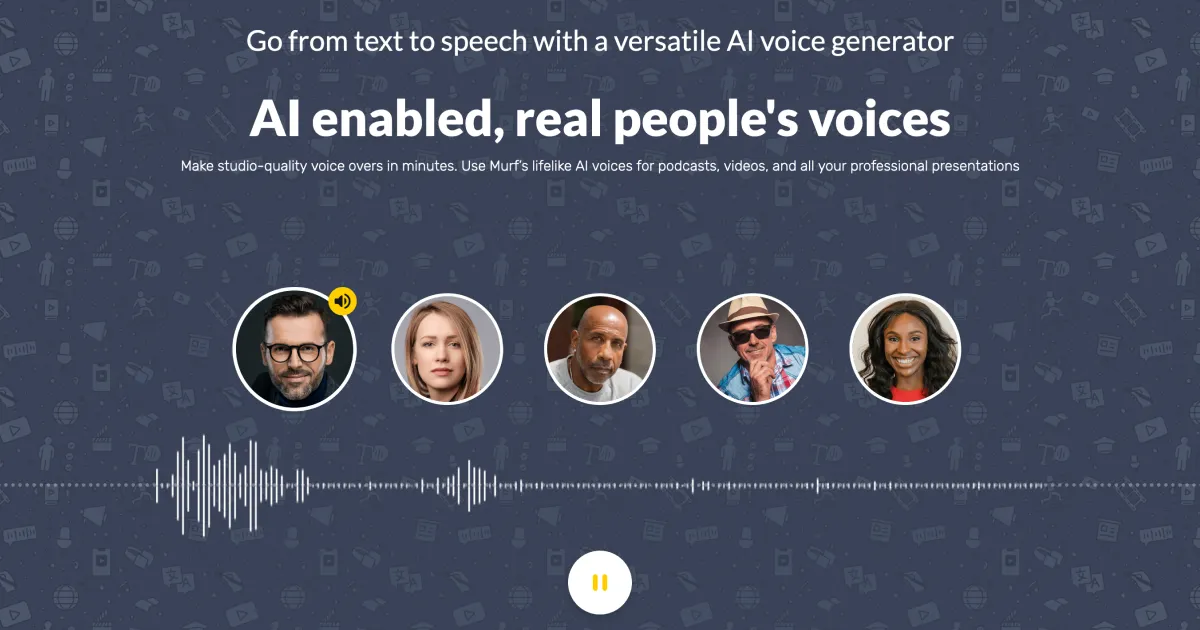
Murf.ai has quickly established itself as a frontrunner in the AI text-to-speech market, offering a compelling blend of high-quality voice synthesis and user-friendly features. What sets Murf.ai apart is its focus on creating voices that sound remarkably human-like, with natural intonation and emotion that can be tailored to suit various contexts and tones.
One of Murf.ai’s standout features is its extensive library of voice options, covering a wide range of accents, ages, and styles. This diversity allows users to find the perfect voice for their specific needs, whether it’s a professional narration for a corporate video or a friendly voice for an audiobook. The platform also offers voice cloning capabilities, enabling users to create custom voices that match their brand or personal preferences.
Murf.ai’s intuitive interface makes it easy for users to edit and fine-tune their audio output. The platform provides tools for adjusting emphasis, adding pauses, and even inserting sound effects, giving users granular control over the final product. This level of customization, combined with the platform’s high-quality voice synthesis, makes Murf.ai a top choice for content creators and businesses looking to produce professional-grade audio content efficiently.
LOVO has made significant strides in the AI text-to-speech landscape, positioning itself as a versatile and powerful tool for voice synthesis. The platform’s strength lies in its advanced AI algorithms that produce exceptionally natural-sounding voices, capable of conveying subtle emotions and nuances that were once the exclusive domain of human voice actors.
One of LOVO’s most impressive features is its ability to generate voices in over 100 languages and dialects. This extensive language support makes it an invaluable tool for businesses and content creators operating in global markets. The platform also offers a unique “Voice Marketplace” where users can browse and select from a vast array of voice styles, or even hire voice actors to create custom AI voices based on their recordings.
LOVO’s commitment to continuous improvement is evident in its regular updates and new feature releases. The platform has introduced innovative capabilities such as voice cloning, which allows users to create AI versions of their own voices or those of specific individuals. This feature opens up exciting possibilities for personalized content creation and brand-specific audio production.
Speechify has gained popularity as a versatile text-to-speech solution that caters to both individual users and businesses. What distinguishes Speechify is its focus on accessibility and ease of use, making it an excellent choice for those who want to convert written content into audio quickly and efficiently.
The platform offers a wide range of natural-sounding voices and supports multiple languages, ensuring that users can find the perfect voice for their content regardless of the target audience. Speechify’s mobile app is particularly noteworthy, allowing users to convert text to speech on the go, making it an invaluable tool for students, professionals, and anyone who wants to consume written content in audio format.
Speechify’s integration capabilities are another strong selling point. The platform can be easily incorporated into various applications and websites, enabling businesses to add text-to-speech functionality to their products seamlessly. This flexibility, combined with Speechify’s high-quality voice output, makes it a compelling choice for developers and companies looking to enhance their digital offerings with audio capabilities.
ElevenLabs has emerged as a groundbreaking player in the AI text-to-speech market, pushing the boundaries of what’s possible in voice synthesis. The platform’s claim to fame is its hyper-realistic voice generation, which leverages advanced deep learning techniques to produce voices that are often indistinguishable from human speech.
What sets ElevenLabs apart is its focus on voice customization and emotion control. Users can fine-tune various aspects of the generated voices, including pitch, speed, and emotional tone, allowing for an unprecedented level of control over the audio output. This granular customization makes ElevenLabs an excellent choice for creative projects that require nuanced and expressive vocal performances.
ElevenLabs also offers a unique voice cloning feature that allows users to create AI versions of voices based on just a few minutes of audio samples. This capability opens up exciting possibilities for personalized content creation, voice preservation, and even the recreation of historical voices for educational or entertainment purposes. As the technology continues to evolve, ElevenLabs is poised to remain at the forefront of AI voice synthesis innovation.
Typecast.ai is a rising star in the AI text-to-speech landscape, offering a unique approach to voice synthesis that combines high-quality audio output with powerful customization tools. The platform stands out for its focus on creating natural, expressive voices that can capture the nuances of human speech, making it an excellent choice for a wide range of applications, from audiobook narration to virtual assistants.
One of Typecast.ai’s key strengths is its advanced voice editing capabilities. Users can fine-tune various aspects of the generated voices, including intonation, emphasis, and pacing, allowing for precise control over the final audio output. This level of customization makes Typecast.ai particularly valuable for projects that require a specific tone or style of delivery.
The platform also offers an impressive array of voices across multiple languages and accents, catering to a global audience. Typecast.ai’s commitment to continuous improvement is evident in its regular updates and new feature releases, including enhanced AI models that produce increasingly lifelike voices. As the demand for high-quality AI-generated speech continues to grow, Typecast.ai is well-positioned to become a major player in the text-to-speech market.
Conclusion
As we look ahead to 2024 and 2025, the AI text-to-speech landscape continues to evolve at a rapid pace. The five platforms we’ve explored – Murf.ai, LOVO, Speechify, ElevenLabs, and Typecast.ai – represent the cutting edge of voice synthesis technology, each offering unique strengths and capabilities to suit a variety of needs and use cases.
While these platforms stand out as leaders in the field, it’s worth noting that there are other notable contenders in the AI TTS market. Platforms like Amazon Polly, Google Cloud Text-to-Speech, and IBM Watson Text to Speech also offer powerful voice synthesis capabilities, particularly for enterprise-level applications. Additionally, emerging startups and open-source projects continue to push the boundaries of what’s possible in AI voice generation, promising even more exciting developments in the years to come.
As you consider which AI text-to-speech platform is right for your needs, it’s essential to evaluate factors such as voice quality, customization options, language support, and integration capabilities. The rapid advancements in this field mean that the tools available today are more powerful and versatile than ever before, opening up new possibilities for content creation, accessibility, and communication.
Whether you’re a content creator looking to produce high-quality audiobooks, a business seeking to enhance customer interactions, or an individual interested in exploring the possibilities of AI-generated speech, the platforms discussed in this guide offer a wealth of options to explore. As we move further into the age of AI-driven communication, these text-to-speech solutions are set to play an increasingly important role in how we create, consume, and interact with audio content.