Discover the Top 5 Most Peaceful Countries of 2024 According to Global Peace Index (GPI)
0
(0)
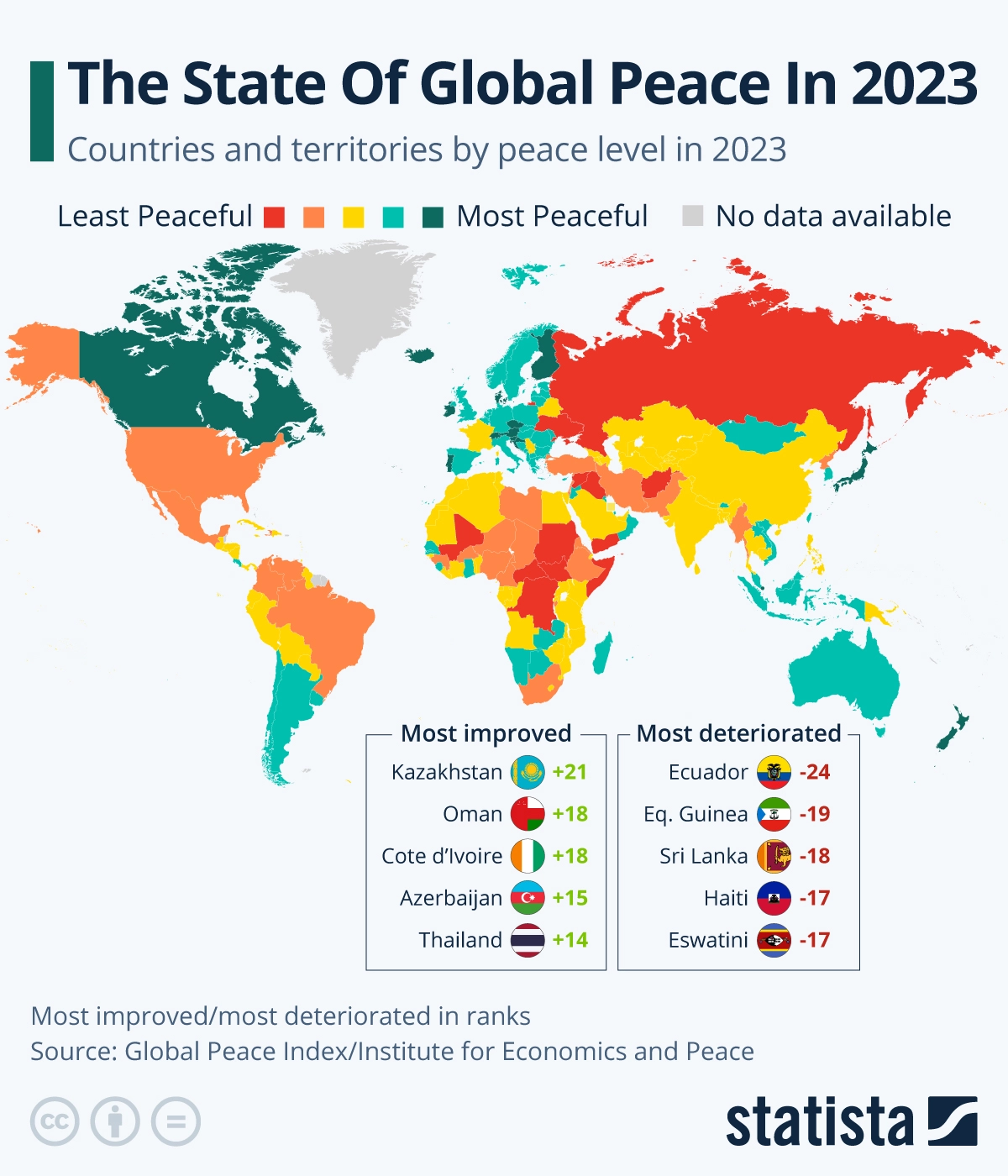
The Global Peace Index (GPI), developed by the Institute for Economics & Peace, serves as a crucial barometer for assessing the state of peace across nations. In its 2024 edition, the GPI has once again provided valuable insights into the world’s most peaceful countries, analyzing 163 independent states and territories. This comprehensive evaluation considers 23 indicators, including societal safety and security, ongoing conflicts, and the degree of militarization. Countries are scored on a scale of one to five, with lower scores indicating higher levels of peacefulness.
The 2024 GPI results highlight a noteworthy trend: the improving stability in Southeast Asia, with Singapore and Malaysia securing positions among the top 10 most peaceful nations globally. This development underscores the region’s commitment to fostering peaceful societies and effective governance. Meanwhile, European and Oceania countries continue to dominate the top rankings, showcasing their long-standing dedication to maintaining peace and stability. As we explore the top five most peaceful countries according to the 2024 GPI, we’ll examine the factors contributing to their success and the lessons they offer for global peace-building efforts.
1. Iceland
Iceland has maintained its position as the world’s most peaceful country for an impressive 17 consecutive years, according to the 2024 Global Peace Index. This Nordic island nation’s unwavering commitment to peace is reflected in its remarkably low score of 1.112 on the GPI scale. Iceland’s consistent top ranking is a testament to its stable political environment, low crime rates, and minimal internal conflicts.
One of the key factors contributing to Iceland’s peaceful status is its strong social cohesion and egalitarian society. The country boasts a high standard of living, excellent education system, and comprehensive social welfare programs, which help minimize societal tensions. Additionally, Iceland’s foreign policy is characterized by neutrality and a focus on international cooperation, particularly in areas such as environmental protection and renewable energy. This approach not only enhances Iceland’s global standing but also contributes to its internal stability by fostering a sense of shared purpose and national pride among its citizens.
2. Ireland
Ireland has secured the second position in the 2024 Global Peace Index with a score of 1.303, reflecting its commitment to maintaining a peaceful and stable society. The country’s rise in the rankings is a result of its continued efforts to address historical conflicts and promote reconciliation, particularly in relation to Northern Ireland. Ireland’s success in fostering peace is deeply rooted in its diplomatic approach to international relations and its strong emphasis on social cohesion.
The Irish government’s focus on economic development and social welfare has played a crucial role in maintaining internal stability. By investing in education, healthcare, and social programs, Ireland has created an environment where citizens feel secure and have opportunities for personal and professional growth. Furthermore, Ireland’s active participation in international peacekeeping missions and its commitment to multilateralism have strengthened its reputation as a promoter of global peace. The country’s ability to balance economic prosperity with social harmony serves as a model for other nations striving to achieve and maintain peace.
Austria has claimed the third spot in the 2024 Global Peace Index with a score of 1.313, solidifying its position as one of the world’s most peaceful nations. This Central European country’s high ranking can be attributed to its long-standing tradition of neutrality, strong democratic institutions, and commitment to social welfare. Austria’s approach to maintaining peace involves a delicate balance between preserving its neutral status and actively participating in international peace initiatives.
One of Austria’s key strengths is its robust social system, which provides comprehensive support to its citizens, reducing social inequalities and potential sources of conflict. The country’s education system, which emphasizes civic education and promotes cultural understanding, plays a crucial role in fostering a peaceful society. Additionally, Austria’s role as a host for numerous international organizations, including United Nations offices, contributes to its diplomatic influence and reinforces its commitment to global peace. The country’s ability to maintain political stability while adapting to changing global dynamics serves as an example of effective governance in the pursuit of peace.
4. New Zealand
New Zealand has secured the fourth position in the 2024 Global Peace Index with a score of 1.323, maintaining its status as one of the most peaceful countries in the world. This achievement is a testament to New Zealand’s commitment to social harmony, environmental sustainability, and effective governance. The country’s approach to peace is characterized by its focus on inclusive policies, respect for indigenous rights, and proactive measures to address social issues.
One of the key factors contributing to New Zealand’s peaceful status is its strong emphasis on cultural diversity and social integration. The government’s efforts to reconcile with the indigenous Māori population and promote their cultural heritage have played a significant role in fostering national unity. Additionally, New Zealand’s progressive environmental policies and commitment to combating climate change demonstrate its dedication to global well-being, which in turn contributes to internal stability. The country’s response to crises, such as the Christchurch mosque shootings in 2019, has showcased its resilience and commitment to maintaining a peaceful society in the face of challenges.
5. Singapore
Singapore has made a remarkable entry into the top five most peaceful countries in the 2024 Global Peace Index, securing the fifth position with a score of 1.339. This achievement is particularly noteworthy for a Southeast Asian nation, highlighting the region’s improving stability. Singapore’s success in fostering peace can be attributed to its strong emphasis on societal stability, effective governance, and a pragmatic approach to addressing security challenges.
The city-state’s rise in the peace rankings is a result of its multifaceted approach to maintaining social harmony. Singapore’s government has implemented policies that promote racial and religious tolerance, ensuring that its diverse population coexists peacefully. The country’s strict law enforcement and low crime rates contribute significantly to its high level of societal safety and security. Furthermore, Singapore’s strategic approach to international relations, balancing diplomatic ties with major powers while maintaining its sovereignty, has helped it navigate complex regional dynamics successfully. The nation’s focus on economic development, coupled with investments in education and healthcare, has created a stable environment where citizens feel secure and prosperous, further reinforcing its peaceful status.
The 2024 Global Peace Index provides valuable insights into the factors that contribute to national and global peace. While the top five countries – Iceland, Ireland, Austria, New Zealand, and Singapore – represent diverse geographical regions and cultural backgrounds, they share common elements that have enabled them to achieve and maintain high levels of peace. These include strong democratic institutions, effective governance, social welfare systems, and a commitment to addressing both internal and external challenges through diplomatic means.
It’s important to note that other countries have also made significant strides in improving their peace rankings. Malaysia, for instance, has secured the 10th position in the 2024 GPI, showcasing Southeast Asia’s growing stability. European nations continue to dominate the top rankings, with Switzerland (6th), Portugal (7th), Denmark (8th), and Slovenia (9th) all featuring in the top 10. This concentration of European countries highlights the continent’s collective commitment to maintaining peace and stability through regional cooperation and shared values.
The success of these peaceful nations offers valuable lessons for countries striving to improve their GPI rankings. Investing in education, healthcare, and social welfare programs can help reduce societal tensions and create a more stable environment. Promoting cultural diversity and inclusion, as demonstrated by New Zealand and Singapore, can foster national unity and resilience. Additionally, maintaining a balanced approach to international relations, as exemplified by Austria and Singapore, can help countries navigate complex global dynamics while preserving their peace and security.
As the world continues to face various challenges, from climate change to economic uncertainties, the importance of peace in fostering national prosperity and global stability cannot be overstated. The countries topping the 2024 Global Peace Index serve as beacons of hope and models for others to emulate. By studying their strategies and adapting them to local contexts, nations worldwide can work towards creating more peaceful societies, ultimately contributing to a more harmonious global community.