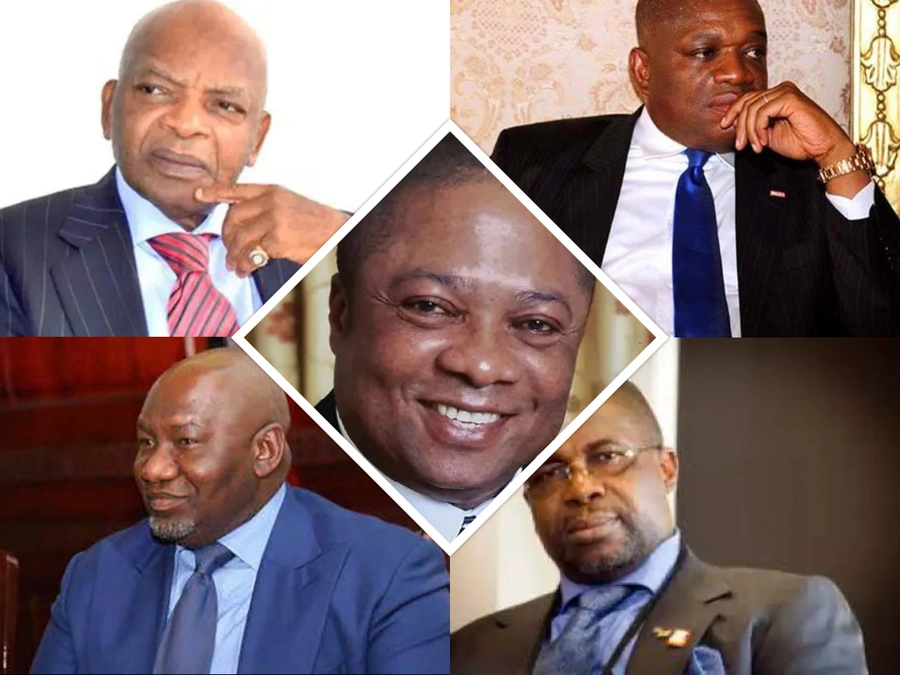
Check Out The Top 5 Igbo Billionaires Dominating Nigeria’s Economy
0
(0)
Nigeria, the largest economy in Africa, has long been a hub of entrepreneurship and innovation. Among its diverse ethnic groups, the Igbo people have consistently demonstrated a remarkable aptitude for business and wealth creation. As we look at the landscape of Nigerian billionaires in past few years, it’s clear that Igbo business leaders continue to play a pivotal role in shaping the country’s economic future.
The Igbo billionaires featured in this list have not only amassed significant personal wealth but have also contributed substantially to Nigeria’s economic growth through their various business ventures and philanthropic efforts. Their success stories serve as inspiration for aspiring entrepreneurs across the nation and beyond, showcasing the power of vision, determination, and strategic thinking in building vast business empires. Let’s delve into the lives and achievements of the top five Igbo billionaires that make the list who are making waves in Nigeria’s business world as of 2024-2025.
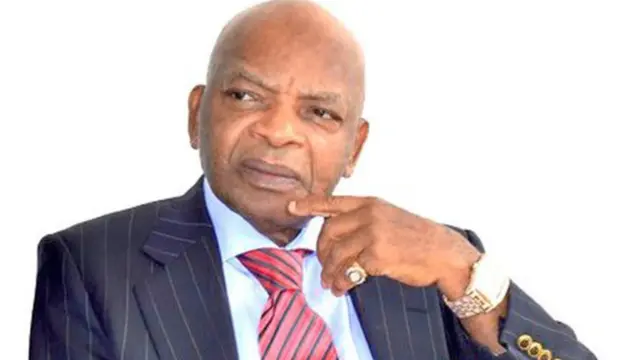
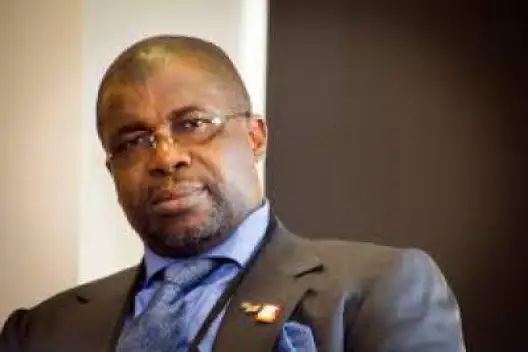
1. Arthur Eze – $5.8 billion
Arthur Eze, often referred to as “The Prince of the Oil and Gas industry,” stands at the pinnacle of Igbo billionaires in Nigeria. Born in Ukpo, Dunukofia Local Government Area of Anambra State, Eze has built an empire that extends far beyond the borders of his home state. As of 2024-2025, his estimated net worth stands at an impressive $5.8 billion, making him not just one of the wealthiest Igbo men, but also one of the richest individuals in Africa.
The cornerstone of Eze’s wealth is Atlas Oranto Petroleum, the largest privately-held Nigerian exploration and production group. Founded in 1991, the company has grown to hold 22 oil and gas licenses in 12 jurisdictions across Africa. Atlas Oranto’s success is a testament to Eze’s business acumen and his ability to navigate the complex world of international oil and gas exploration. The company’s extensive portfolio includes assets in Nigeria, Equatorial Guinea, and other African nations, contributing significantly to Eze’s billionaire status.
Beyond oil and gas, Arthur Eze has diversified his investments across various sectors. He has substantial holdings in real estate, with properties spread across Nigeria, Europe, and the United States. His real estate portfolio includes luxury residential properties, commercial buildings, and vast tracts of undeveloped land, all of which have appreciated considerably over the years. Additionally, Eze has investments in the aviation sector, owning a fleet of private jets that not only serve his personal needs but also operate as a charter service for other high-net-worth individuals.
Arthur Eze is also known for his philanthropic efforts, particularly in his home state of Anambra. He has funded numerous educational initiatives, healthcare projects, and infrastructure developments. His contributions to society extend beyond Nigeria, with donations to causes across Africa and beyond. This combination of business success and charitable giving has earned Eze respect and admiration both within the Igbo community and across Nigeria as a whole.
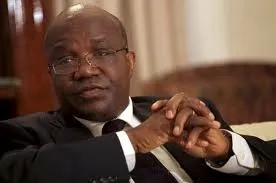
2. Cletus Ibeto – $3.8 billion
Cletus Madubugwu Ibeto, hailing from Nnewi, Anambra State, is a testament to the power of perseverance and innovation in business. With an estimated net worth of $3.8 billion as of 2024-2025, Ibeto has firmly established himself as one of the most successful Igbo billionaires in Nigeria. His journey from a humble apprentice to a business magnate is a story that continues to inspire many aspiring entrepreneurs in Nigeria and beyond.
The Ibeto Group, founded by Cletus Ibeto, is the cornerstone of his vast business empire. What started as a spare parts import business in the 1970s has grown into a conglomerate with interests spanning multiple sectors. The group’s flagship company, Ibeto Petrochemicals Industries Ltd, is one of Nigeria’s largest petrochemical products manufacturers. It has played a significant role in reducing Nigeria’s dependence on imported petroleum products, contributing to the country’s economic growth and creating thousands of jobs in the process.
Beyond petrochemicals, Ibeto has made substantial investments in other sectors. The Ibeto Cement Company is a major player in Nigeria’s construction industry, producing high-quality cement for both domestic use and export. Additionally, Ibeto has interests in hospitality, with a chain of luxury hotels across Nigeria. His real estate portfolio includes prime properties in major Nigerian cities as well as international locations.
Cletus Ibeto’s success is not just measured in financial terms but also in his contributions to Nigeria’s industrial development. He has been a strong advocate for local manufacturing, consistently investing in facilities and technologies that promote made-in-Nigeria products. His efforts have not gone unnoticed, with the Nigerian government recognizing his contributions to the country’s industrialization efforts. Ibeto’s story remains a shining example of how vision, coupled with hard work and strategic thinking, can lead to extraordinary success in the business world.
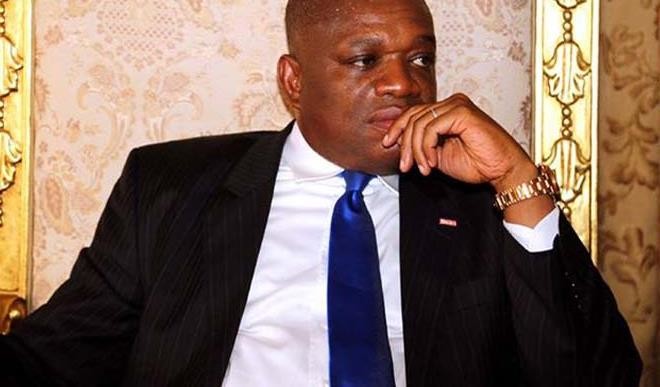
Orji Uzor Kalu, born in Abia State, is a multifaceted personality who has made his mark in business and politics alike. As of 2024-2025, his estimated net worth stands at $3.2 billion, solidifying his position as one of the wealthiest Igbo individuals in Nigeria. Kalu’s journey to billionaire status is a testament to his entrepreneurial spirit and ability to spot opportunities across various sectors of the economy.
The foundation of Kalu’s wealth is Slok Holding, a conglomerate with diverse interests spanning oil and gas, banking, insurance, media, publishing, real estate, and hospitality. Slok’s oil and gas division has been particularly successful, with lucrative contracts for crude oil lifting and exploration. The company’s shipping arm, Slok Nigeria Limited, has also been a significant contributor to Kalu’s wealth, operating a fleet of vessels that service the oil and gas industry.
In the media sector, Kalu owns The Sun Publishing Limited, publishers of The Sun Newspaper, one of Nigeria’s most widely read dailies. This venture has not only been financially rewarding but has also given Kalu a powerful platform to influence public opinion. Additionally, his investments in real estate, both in Nigeria and abroad, have appreciated significantly over the years, further boosting his net worth.
Orji Uzor Kalu’s business acumen is matched by his political savvy. He served as the Governor of Abia State from 1999 to 2007 and is currently a serving Senator of the Federal Republic of Nigeria. His political connections have often been seen as a factor in his business success, although Kalu maintains that his wealth is the result of hard work and smart investments. Despite some controversies, including legal challenges, Kalu has managed to maintain his status as one of Nigeria’s most prominent Igbo billionaires, continuing to expand his business interests and political influence.
4. Emeka Offor – $2.9 billion
Sir Emeka Offor, born in Oraifite, Anambra State, has established himself as one of Nigeria’s most successful businessmen with an estimated net worth of $2.9 billion as of 2024-2025. His journey to billionaire status is a testament to his business acumen, diversified portfolio, and ability to thrive in challenging economic environments.
At the heart of Offor’s business empire is the Chrome Group, a conglomerate with interests in oil and gas, power, logistics, insurance, and telecommunications. The group’s flagship company, Chrome Oil Services Limited, has been a major player in Nigeria’s oil and gas sector for decades. Through strategic partnerships and government contracts, Chrome Oil Services has been involved in some of the most significant oil and gas projects in Nigeria, contributing substantially to Offor’s wealth.
Beyond oil and gas, Emeka Offor has made significant investments in Nigeria’s power sector. His company, Interstate Electrics, is a key player in the distribution of electricity in parts of Nigeria. This venture has not only been financially rewarding but has also positioned Offor as a crucial figure in Nigeria’s efforts to improve its power infrastructure. Additionally, his investments in the telecommunications sector, through Global Com Limited, have capitalized on the rapid growth of mobile and internet services in Nigeria.
Sir Emeka Offor is also known for his philanthropic efforts, particularly in the areas of education and healthcare. The Sir Emeka Offor Foundation has donated millions of dollars to various causes, including polio eradication efforts in Nigeria. His contributions to society extend beyond Nigeria, with international recognitions for his charitable work. This combination of business success and social responsibility has cemented Offor’s position as one of the most respected Igbo billionaires in Nigeria.
5. Benedict Peters – $2.7 billion
Benedict Peters, hailing from Onicha Olona in Delta State, rounds out our list of top Igbo billionaires with an estimated net worth of $2.7 billion as of 2024. Peters’ rise to billionaire status is a story of strategic thinking, risk-taking, and capitalizing on opportunities in Nigeria’s energy sector.
The cornerstone of Peters’ wealth is Aiteo Group, an integrated energy conglomerate with a focus on exploration, production, refining, and supply. Founded in 1999, Aiteo has grown to become one of the largest indigenous oil-producing firms in Nigeria. The company’s crowning achievement came in 2014 when it acquired Oil Mining Lease (OML) 29 and the Nembe Creek Trunk Line from Shell, Total, and Eni for $2.7 billion. This acquisition significantly boosted Aiteo’s oil production capacity and cemented Peters’ status as a key player in Nigeria’s oil and gas industry.
Beyond oil and gas, Benedict Peters has diversified his investments into other sectors. He has substantial interests in power generation and distribution, aiming to capitalize on Nigeria’s growing energy needs. Additionally, Peters has invested in agriculture, seeing it as a crucial sector for Nigeria’s economic diversification. His agricultural investments span several states in Nigeria and focus on cash crops and food production.
Peters is also known for his investments in sports and entertainment. Aiteo Group has been a major sponsor of Nigerian football, including sponsorship deals with the Nigerian Football Federation. This not only serves as a marketing strategy for his businesses but also contributes to the development of sports in Nigeria.
Despite facing some legal challenges, which he has consistently denied as being politically motivated, Benedict Peters has maintained his position as one of Nigeria’s most successful Igbo businessmen. His story of building a multi-billion dollar company from scratch continues to inspire many young entrepreneurs in Nigeria and across Africa.
Conclusion
The success stories of these top five Igbo billionaires in Nigeria as of 2024-2025 showcase the entrepreneurial spirit and business acumen that have long been associated with the Igbo people. From Arthur Eze’s dominance in the oil and gas sector to Benedict Peters’ strategic investments across multiple industries, these individuals have not only amassed significant personal wealth but have also contributed substantially to Nigeria’s economic growth and development.
It’s worth noting that there are several other notable Igbo billionaires who, while not making it into the top five, have also made significant impacts in their respective fields:
Andy Uba, with an estimated net worth of $2.1 billion, has interests in oil and gas, real estate, and politics.
ABC Orjiako, worth approximately $1.2 billion, is known for his leadership in Seplat Petroleum Development Company.
Leo Stan Ekeh, also estimated at $1.2 billion, is the founder of Zinox Technologies and has been instrumental in Nigeria’s tech industry growth.
Pascal Gabriel Dozie, with a net worth of $1 billion, is the founder of Diamond Bank (now Access Bank) and has significant investments in telecommunications.
Tony Elumelu, while not among the top billionaires, is a notable mention for his influential role in banking, investments, and philanthropy through the Tony Elumelu Foundation.
These Igbo billionaires, through their various business ventures, have created employment opportunities, contributed to infrastructure development, and played crucial roles in Nigeria’s economic diversification efforts. Their success stories serve as inspiration for the next generation of entrepreneurs, not just within the Igbo community, but across Nigeria and Africa as a whole.
As Nigeria continues to navigate its economic challenges and opportunities, the contributions of these Igbo billionaires will undoubtedly play a significant role in shaping the country’s financial landscape. Their ability to adapt to changing market conditions, diversify their investments, and contribute to social causes sets a powerful example for aspiring business leaders across the nation.