Top 10 African Countries With The Largest Christian Populations In 2026
0
(0)
Have you ever wondered why Christianity in Africa continues to flourish with unmatched energy and global influence, shaping millions of lives across vast landscapes?
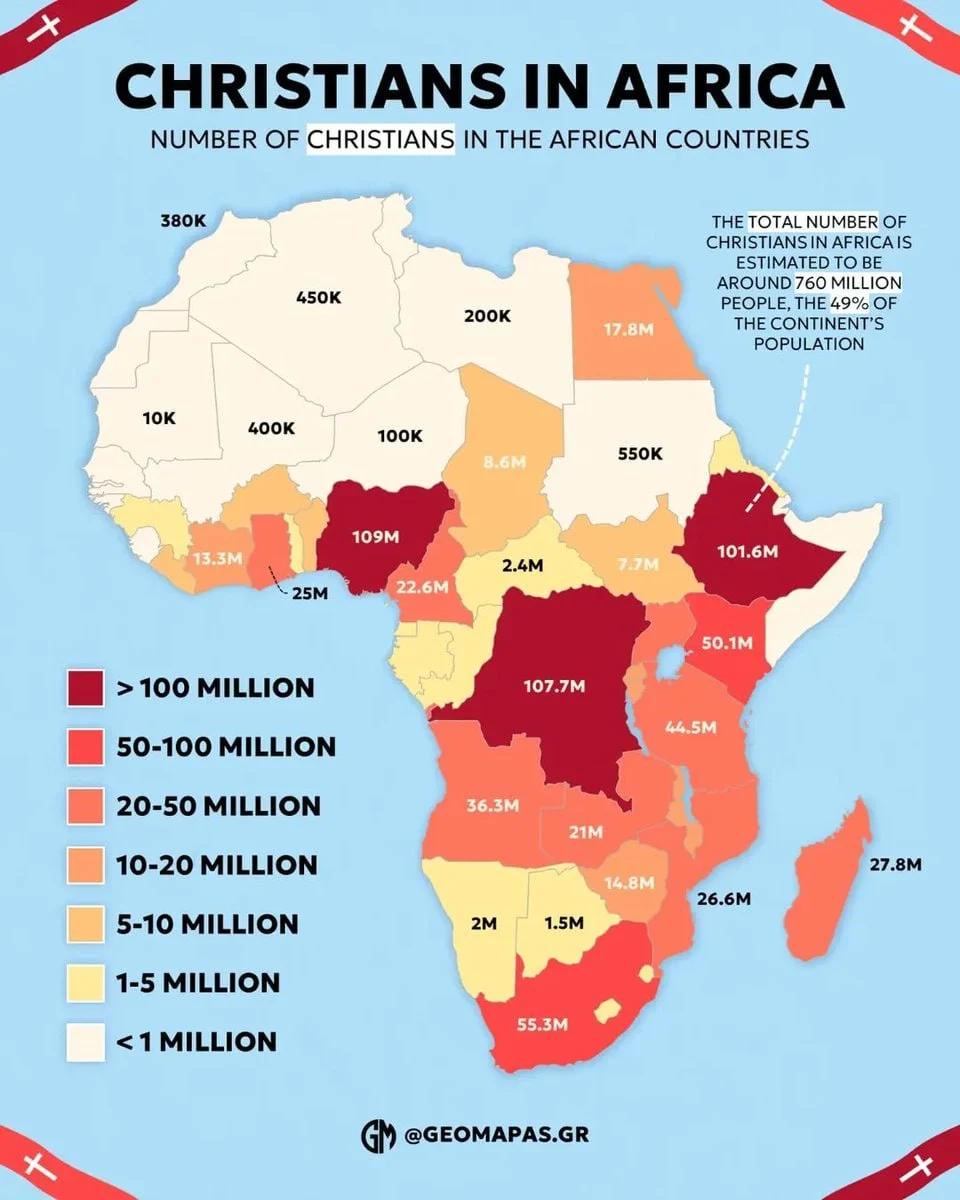
Africa stands as a powerhouse of faith, where Christianity in Africa has grown remarkably to become one of the most dynamic expressions of the religion worldwide. From ancient Orthodox traditions to vibrant Pentecostal movements, these Christian countries demonstrate the profound impact of faith on culture, society, and daily living. With hundreds of millions of believers, the continent’s Christian populations drive social change, community development, and spiritual renewal. This ranking highlights the leading nations based on absolute Christian numbers, offering insights into their unique histories and contemporary roles in global Christianity.
1. Ethiopia
Estimated Christian Population: 77.5 million
Ethiopia ranks as the foremost among Christian countries in Africa with its massive believer base. The nation boasts one of the world’s oldest Christian traditions through the Ethiopian Orthodox Tewahedo Church, dating back to the fourth century. Christianity in Africa finds deep roots here, where faith intertwines with national identity and ancient customs. Believers participate actively in colorful festivals, monastic life, and community service that strengthen social bonds. The church plays a vital educational and charitable role, supporting schools and hospitals amid diverse ethnic groups. This enduring legacy makes Ethiopia a cornerstone for understanding Christianity’s long history on the continent.
2. Nigeria
Estimated Christian Population: 74.4 million
Nigeria follows closely as a leading force among Christian countries, known for its energetic and influential faith communities. Southern regions feature thriving Pentecostal and evangelical movements that export gospel music and teachings globally. Christianity in Africa gains remarkable visibility through massive crusades, megachurches, and youth-led initiatives in this populous nation. Churches address social issues like education, healthcare, and poverty alleviation with dedicated programs. Despite religious diversity, Christian leaders promote peace and national development. The country’s vibrant worship styles and media presence highlight why it remains a powerhouse of contemporary Christian expression.
3. Democratic Republic of the Congo
Estimated Christian Population: 63.1 million
The Democratic Republic of the Congo holds a prominent position with its extensive Christian communities spread across vast territories. Catholicism and Protestant denominations dominate, offering stability and hope in challenging times. Christianity in Africa manifests strongly here through grassroots churches that provide essential services where state infrastructure lags. Believers engage in fervent prayer meetings, choirs, and development projects that uplift local populations. The faith has adapted to local cultures while maintaining core doctrines, fostering resilience amid historical difficulties. This makes the DRC a standout example of Christianity’s adaptive strength on the continent.
South Africa features one of the most diverse and influential Christian landscapes among these nations. Various denominations including Methodist, Anglican, and Zionist churches contribute to its rich spiritual tapestry. Christianity in Africa evolved uniquely here during the anti-apartheid struggle, with faith leaders playing pivotal reconciliation roles. Today, churches drive social justice, education, and HIV awareness campaigns effectively. The country blends traditional African elements with Christian practices in worship and community life. Its urban megachurches and rural congregations alike underscore Christianity’s ongoing relevance in building a united society.
5. Kenya
Estimated Christian Population: 40.7 million
Kenya shines with its substantial Christian population and active missionary heritage. Protestant and Catholic groups lead in education and healthcare provision nationwide. Christianity in Africa resonates powerfully through Kenya’s evangelical movements and outdoor crusades that attract thousands. Churches support economic empowerment programs, youth development, and environmental conservation efforts. The faith influences politics, family life, and cultural festivals across ethnic lines. This East African nation exemplifies how Christianity fosters national progress and moral guidance in modern times.
6. Tanzania
Estimated Christian Population: 31.3 million
Tanzania contributes significantly to the roster of major Christian countries with its growing believer numbers. The faith coexists harmoniously with other traditions in this diverse society. Christianity in Africa appears through Catholic missions and Protestant initiatives that emphasize community service and literacy. Churches operate schools and clinics that reach remote areas effectively. Believers integrate Swahili hymns and local customs into worship services. The country’s stable environment allows Christian organizations to focus on sustainable development and interfaith dialogue.
7. Uganda
Estimated Christian Population: 29.3 million
Uganda stands out for its deep Christian commitment and historical missionary impact. Anglican and Catholic traditions remain strong alongside emerging Pentecostal groups. Christianity in Africa finds passionate expression here, where faith inspired resistance to past tyrannies and continues to promote moral values. Churches excel in providing quality education, orphan care, and health services. Vigorous youth ministries and gospel campaigns energize the population. This nation highlights Christianity’s role in fostering peace and human development across generations.
8. Madagascar
Estimated Christian Population: 22.3 million
Madagascar features a robust Christian presence shaped by early missionary activities. Protestant and Catholic communities thrive alongside traditional beliefs in unique syncretic forms. Christianity in Africa adapts creatively on this island with lively hymns and church-led social projects. Faith groups address poverty, environmental protection, and healthcare needs diligently. Believers participate in national events and community building initiatives. The country’s Christian heritage enriches its cultural identity and future aspirations.
Ghana boasts lively Christian communities known for charismatic worship and social engagement. Pentecostal churches have grown rapidly, influencing music, media, and business ethics. Christianity in Africa gains momentum through Ghana’s prayer conventions and leadership training programs. Churches champion education, women’s empowerment, and anti-corruption drives successfully. The faith promotes national unity in a multi-ethnic context. Ghana serves as a model of how Christianity drives positive transformation and economic hope.
10. Angola
Estimated Christian Population: 17.1 million
Angola completes this list with its significant Christian majority shaped by Portuguese colonial history and post-war recovery. Catholicism and various Protestant denominations support reconstruction efforts. Christianity in Africa demonstrates resilience here as churches aid in healing and infrastructure building. Believers focus on youth education, reconciliation, and economic initiatives. Vibrant services blend local rhythms with gospel messages effectively. Angola illustrates Christianity’s power to rebuild societies after conflict.
Conclusion
The remarkable growth of Christianity in Africa signals a shift in global faith dynamics, with these Christian countries leading the way through dedication and innovation. Their combined populations underscore the continent’s rising influence in worldwide Christianity. As these nations continue to nurture believers, they offer valuable lessons in faith, resilience, and community impact for the rest of the world. The future of Christianity looks bright across African landscapes.